A man’s daring climb up the iconic Big Ben’s Elizabeth Tower at the Palace of Westminster in central London captured the attention of onlookers and law enforcement alike. The individual, holding a Palestinian flag, triggered a 16-hour standoff that culminated in his arrest in the most dramatic fashion.
The incident unfolded early on a Saturday morning, prompting emergency services to respond swiftly to the reports of a protester making his way up the tower. Despite reaching a precarious ledge several meters up, the barefoot man adamantly refused to descend, setting the stage for a lengthy negotiation process that held the city in suspense.
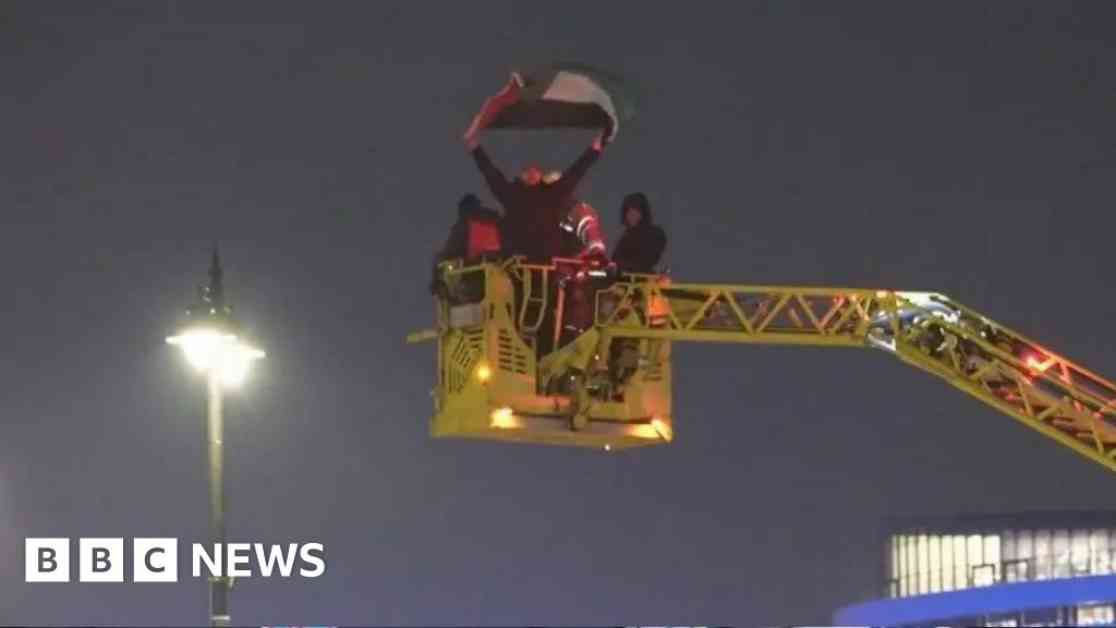
As the man perched on the ledge, refusing to budge, emergency crews carefully navigated the delicate situation. A crane was deployed to lift personnel up for face-to-face negotiations. The scene was reminiscent of a high-stakes movie climax, with the man eventually descending in a cherry picker under the midnight chimes of Big Ben.
Westminster Police, in a statement following the arrest, highlighted the complexities involved in managing such a high-risk situation. The need to ensure the safety of all involved, including officers, the individual, and the public, was paramount throughout the operation. Collaboration with various agencies, including the London Fire Brigade, was instrumental in bringing the incident to a peaceful resolution.
The repercussions of the climber’s bold actions reverberated across the area, leading to the closure of key thoroughfares and the cancellation of scheduled tours. Westminster Bridge, a vital exit point near the Palace of Westminster, was temporarily shut down, causing disruptions in the immediate vicinity.
Negotiations Amidst Tension
Throughout the day and into the night, negotiations between the authorities and the protester continued, with both sides attempting to reach a peaceful conclusion. The man’s defiant stance, as captured in a video shared on social media, added a layer of complexity to the already tense situation. His insistence on coming down on his terms underscored the challenges faced by the responders tasked with ensuring his safe descent.
In the backdrop of the standoff, expressions of support and solidarity emerged from a small group of onlookers, offering words of encouragement to the protester. The emotional resonance of the moment was palpable, with chants of “Free Palestine” and declarations of heroism echoing through the air. The scene, juxtaposed against the historic backdrop of the Palace of Westminster, underscored the power of individual actions to spark broader conversations and movements.
As the day wore on, the Met Police took decisive action to maintain order in the vicinity, imposing restrictions on protest activities near Parliament Square. The measures were aimed at preventing any further disruptions while allowing the authorities to focus on resolving the ongoing situation at hand. The balancing act between upholding public safety and respecting the right to protest underscored the delicate dance that law enforcement often finds itself engaged in during such incidents.
Arrest and Aftermath
With the arrest of the protester, the tense standoff came to a close, bringing relief to all involved. The successful resolution of the incident was a testament to the coordinated efforts of the emergency responders and the collaborative spirit that underpinned their actions throughout the day. The man’s descent from the tower marked the end of a dramatic chapter in the heart of London, leaving behind a lingering sense of intrigue and reflection on the events that had transpired.
In the aftermath of the climber’s arrest, the area around the Palace of Westminster slowly returned to normalcy, with traffic resuming its flow and tours of the Parliamentary Estate resuming as scheduled. The echoes of the day’s events lingered in the air, serving as a reminder of the unpredictable nature of public demonstrations and the challenges they pose to law enforcement and city officials.
As the city settled back into its routine, the images of the protester on the ledge, defiant yet determined, served as a poignant reminder of the power of individual actions to capture attention, spark conversations, and evoke emotions. The climber’s bold ascent and subsequent arrest may have been a singular event in the annals of the Palace of Westminster’s history, but its impact reverberated far beyond the confines of the iconic tower, leaving an indelible mark on all who bore witness to the dramatic spectacle.