
The Evolving Landscape of Gaming
The gaming industry has undergone a remarkable transformation over the past few decades. What was once considered a mere pastime for children has evolved into a multi-billion-dollar industry that caters to a diverse demographic. This evolution has not only redefined entertainment but has also paved the way for innovative applications in various fields, including education.
The Educational Potential of Gaming
Gaming is increasingly being recognized for its potential to enhance learning and development. Educational games and simulations are being integrated into classrooms to make learning more engaging and interactive. These games can help students grasp complex concepts in subjects like mathematics, science, and history by providing a hands-on, immersive experience. The interactive nature of gaming can make abstract concepts more tangible and easier to understand.
For instance, strategy games can teach problem-solving and critical thinking skills, while role-playing games can enhance creativity and social skills. The helpful resources online guide provides a wealth of information on how different games can be utilized for educational purposes. This resource is particularly useful for educators looking to incorporate gaming into their teaching methods.
The Role of Gamification in Education
Gamification, the application of game-design elements and principles in non-game contexts, is another area where gaming is making a significant impact. By incorporating elements like points, badges, and leaderboards into educational platforms, educators can motivate students to engage more actively with the material. This approach can make learning more enjoyable and rewarding, thereby increasing student participation and retention.
Gamification can also be used to track student progress and provide immediate feedback, which is crucial for effective learning. For example, language learning apps often use gamification to encourage regular practice and reward users for achieving milestones. This not only makes the learning process more enjoyable but also helps students stay motivated and committed to their studies.
The Challenges and Considerations
While the potential benefits of gaming in education are numerous, there are also several challenges and considerations to keep in mind. One of the primary concerns is the potential for gaming to become a distraction rather than a tool for learning. It is essential to ensure that the games used in educational settings are designed with clear learning objectives and are aligned with the curriculum.
Another challenge is the digital divide, which refers to the gap between those who have access to technology and those who do not. Not all students have equal access to the necessary devices and internet connectivity required for gaming-based learning. This can create disparities in educational opportunities and outcomes. Educators and policymakers must address this issue to ensure that all students can benefit from the educational potential of gaming.
The Future of Gaming in Education
The future of gaming in education looks promising, with advancements in technology continuing to open up new possibilities. Virtual reality (VR) and augmented reality (AR) are two technologies that have the potential to revolutionize the way students learn. VR can provide immersive, interactive experiences that transport students to different environments and historical periods, making learning more engaging and memorable.
AR, on the other hand, can overlay digital information onto the real world, creating a blended learning environment. For example, students can use AR apps to explore the human anatomy or historical sites, enhancing their understanding of complex subjects. As these technologies become more accessible and affordable, their integration into educational settings is likely to increase.
Conclusion
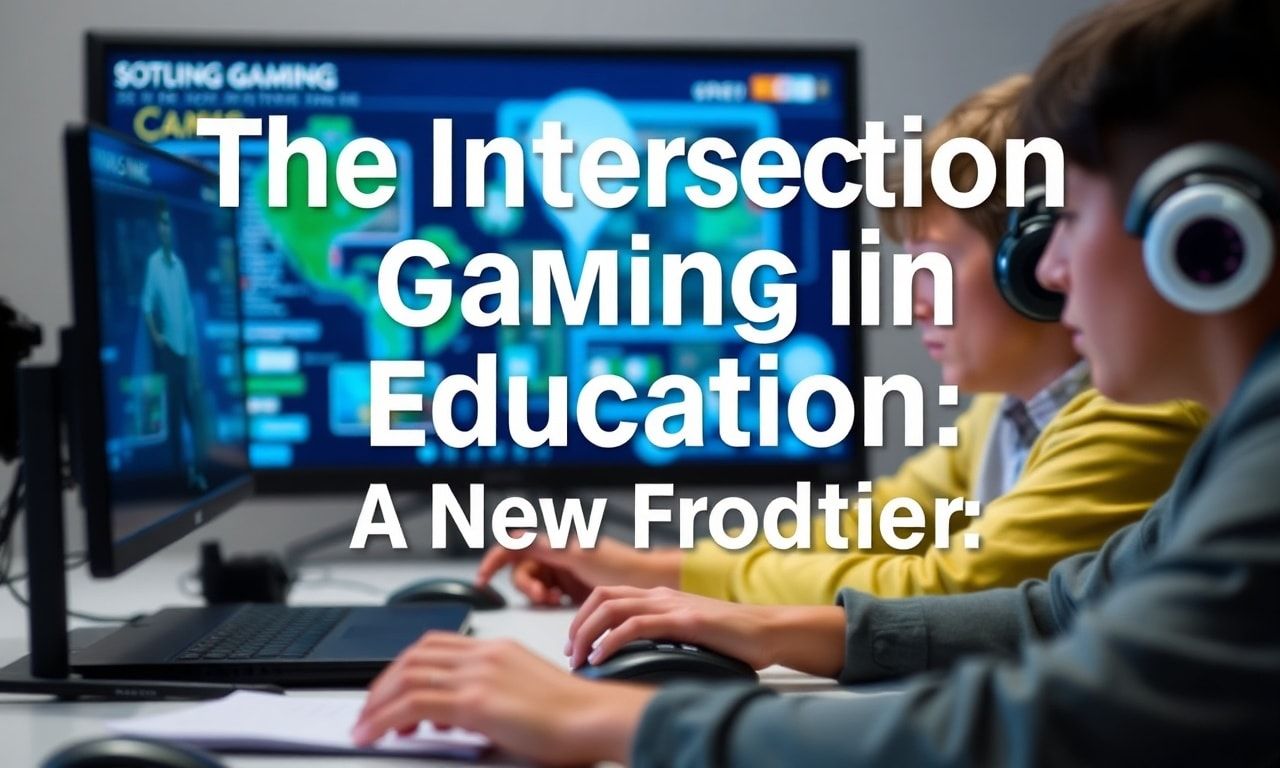
The intersection of gaming and education represents a new frontier with immense potential. By leveraging the engaging and interactive nature of games, educators can create more effective and enjoyable learning experiences. However, it is crucial to address the challenges and ensure that all students have equal access to these opportunities. With the right approach and resources, gaming can play a significant role in shaping the future of education.