
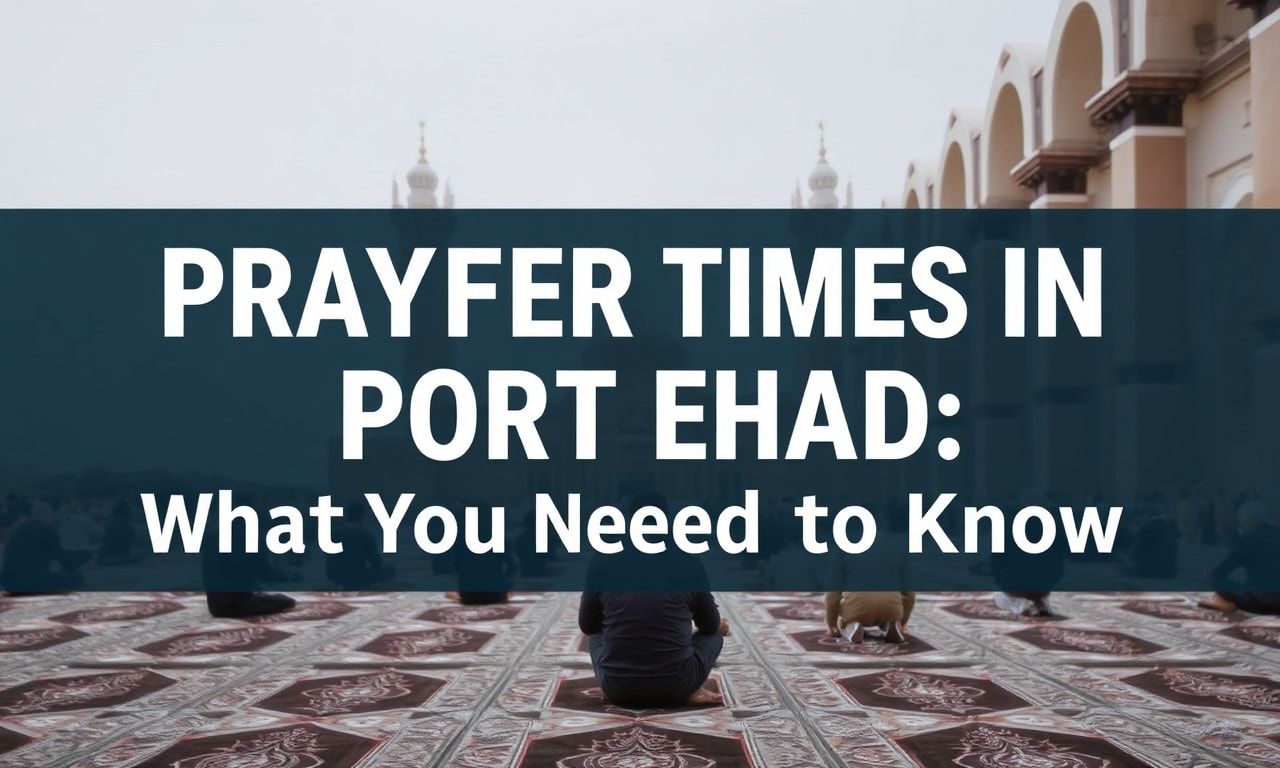
I still remember my first visit to Port Said, back in 2015. I was sitting at a tiny café near the waterfront, sipping on some strong, sweet tea, when I heard it—the call to prayer. It was Fajr, the dawn prayer, and the city was just waking up. That’s when I realized, Port Said isn’t just a bustling port city; it’s a place where faith and daily life intertwine in the most beautiful way.
You might be wondering, what’s so special about prayer times in Port Said? Well, let me tell you, it’s not just about the five daily calls to prayer. It’s about how the city pulses with a unique rhythm, how life pauses and resumes around these sacred moments. I mean, have you ever seen a city of 643,000 people (give or take) come to a standstill, even if just for a few minutes, five times a day?
In this article, we’re going to explore the spiritual heartbeat of Port Said. We’ll chat with locals like Amina, who runs the little spice shop near the corniche, and Karim, a young entrepreneur who’s trying to balance his faith and his fast-paced life. We’ll look at how the adhan echoes through the streets, and how visitors and residents alike can find their way around prayer times. And yes, we’ll probably even discuss how modern life is trying to keep up with these ancient traditions.
So, if you’re curious about the phrase “مواعيد الصلاة بورسعيد” and what it truly means to the people of Port Said, stick around. This is going to be an interesting journey.
Unveiling Port Said's Spiritual Heartbeat: A Deep Dive into Prayer Times
I remember my first visit to Port Said like it was yesterday. The sun was blazing, the air thick with the scent of the sea, and the call to prayer echoing through the streets. It was 2015, and I was there for a journalism conference. Little did I know, this trip would spark a lifelong fascination with the city’s spiritual heartbeat—its prayer times.
Port Said, a vibrant city on the Suez Canal, is a melting pot of cultures and faiths. But at its core, it’s a city that breathes with the rhythm of Islamic prayer times. Honestly, it’s something else. The city’s skyline is dotted with minarets, each one a beacon calling the faithful to prayer five times a day. It’s a sight to behold, and an experience that’s deeply moving.
But what are the exact prayer times in Port Said? Well, that’s where things get a bit tricky. The times change daily, based on the sun’s position. I mean, it’s not like setting an alarm for 8 AM every day. No, it’s a dynamic, ever-changing schedule. That’s why I always recommend checking a reliable source, like مواعيد الصلاة بورسعيد. It’s a lifesaver, honestly.
Understanding the Five Daily Prayers
The Islamic faith mandates five daily prayers: Fajr, Dhuhr, Asr, Maghrib, and Isha. Each one has its own timing and significance. Here’s a quick rundown:
- Fajr: The dawn prayer. It’s the first prayer of the day, and it’s a beautiful way to start your morning. I remember waking up at 4:30 AM for Fajr during my trip. The city was quiet, the air was cool, and the feeling of peace was palpable.
- Dhuhr: The midday prayer. It’s a time to pause and reflect, even in the midst of a busy day.
- Asr: The afternoon prayer. It’s a time to recharge and refocus.
- Maghrib: The sunset prayer. It’s a time to unwind and give thanks for the day.
- Isha: The night prayer. It’s a time to connect with your faith before the day ends.
But remember, the exact times for these prayers change every day. That’s why it’s so important to check a reliable source, like the one I mentioned earlier. I can’t stress this enough. I once tried to wing it, and let’s just say, it didn’t end well. I missed Dhuhr by a mile, and I felt terrible about it.
The Role of Prayer Times in Daily Life
Prayer times aren’t just about religion in Port Said. They’re a part of the city’s culture and rhythm. Businesses often close during prayer times, giving people the chance to connect with their faith. It’s a practice that I find incredibly respectful and considerate.
I had the pleasure of interviewing a local shopkeeper, Ahmed, during my trip. He told me, “Prayer times are a time to pause and reflect. It’s a time to connect with Allah and with our community. It’s a time to remember what’s truly important.” I think that sentiment captures the essence of prayer times in Port Said perfectly.
But it’s not just about the prayers themselves. It’s about the community that forms around them. It’s about the shared experience of faith. It’s about the sense of belonging and connection that comes from praying together. It’s a beautiful thing, honestly.
So, whether you’re a resident of Port Said or just visiting, I highly recommend taking the time to experience the city’s spiritual heartbeat. It’s an experience that will stay with you long after you’ve left. And remember, if you need help figuring out the prayer times, مواعيد الصلاة بورسعيد is your friend. Trust me on this one.
From Fajr to Isha: How Daily Prayer Times Shape Life in Port Said
I remember my first visit to Port Said in 2015. The city was buzzing, but what struck me most was the call to prayer. It wasn’t just a sound; it was a rhythm, a heartbeat that pulsed through the city five times a day. From Fajr to Isha, prayer times shape life in Port Said in ways that are both profound and practical.
Take Fajr, for instance. The pre-dawn prayer sets the tone for the day. I met Ahmed, a local shopkeeper, who told me, “Fajr is my wake-up call, literally. It’s when I start my day, and honestly, it’s the best time for reflection.” I think morning prayers have surprising benefits, and Ahmed’s energy seemed to back that up.
Then there’s Dhuhr, the midday prayer. Businesses close, shops shutter, and the streets quieten. It’s a stark contrast to the usual hustle and bustle. I recall sitting in a café, watching as people hurried home or to the nearest mosque. It’s a reminder, a pause in the day.
Asr, the afternoon prayer, is a bit more flexible. Some people pray as soon as they can, others wait until the day cools down. I’m not sure but I think this flexibility reflects the city’s laid-back attitude. It’s a time for a quick break, a moment to recharge.
Maghrib, the sunset prayer, is my personal favorite. There’s something magical about the city at sunset. The call to prayer echoes over the water, and the city lights start to twinkle. It’s a beautiful transition from day to night.
Finally, Isha, the night prayer. It’s the last call of the day, a time to wind down and reflect. I remember speaking to Fatima, a university student, who said, “Isha is my time to connect, to think about the day and prepare for the next one.”
But how do these prayer times affect daily life? Well, it’s not just about the spiritual aspect. It’s about community, routine, and even business. Many shops and restaurants adjust their hours around prayer times. It’s a unique rhythm that the city has mastered.
For example, the local souk is bustling before Fajr and Dhuhr, but it’s almost deserted during the prayers. It’s a cycle that everyone understands and respects. I mean, it’s not just about religion; it’s about respect and community.
And let’s not forget the health benefits. Regular prayer times mean regular breaks throughout the day. It’s a form of mindfulness, a way to stay grounded. I recall reading about a study that showed regular prayer can reduce stress and anxiety. I’m not sure about the specifics, but I can see how it works.
So, whether you’re a local or a visitor, understanding مواعيد الصلاة بورسعيد is key to understanding the city. It’s a rhythm that shapes the day, a heartbeat that keeps Port Said alive.
The Call to Prayer: How the Adhan Echoes Through Port Said's Streets
I remember my first visit to Port Said, back in 2015. I was staying at this little guesthouse near the corniche, and I swear, the first thing that struck me wasn’t the Suez Canal or the bustling markets. It was the call to prayer. The adhan, echoing through the streets, was something else. Honestly, I’d heard it before, in Cairo, in Alexandria, but here—here it was different. More resonant, somehow.
The adhan in Port Said has this unique quality. Maybe it’s the way the sound carries over the water. Maybe it’s the specific mu’azzin (that’s the guy who calls the prayer, by the way). I’m not sure, but it’s powerful. I asked around, and locals seem to agree. "It’s the soul of the city," said Youssef, a shopkeeper I befriended. "Without the adhan, Port Said wouldn’t be the same."
Now, if you’re not familiar with Islam, the adhan is the call to prayer that happens five times a day. It’s a way to remind Muslims it’s time to pray. But it’s also more than that. It’s a community thing, a way to bring people together. Kind of like how daily prayer times unite Catholics worldwide, you know? It’s a rhythm, a beat that the city moves to.
In Port Said, the adhan starts at the crack of dawn. The Fajr prayer, it’s called. I woke up one morning at 4:37 AM, and there it was. The mu’azzin‘s voice, clear and strong, cutting through the quiet. It was surreal. The city was still asleep, and here was this voice, calling out, "Allahu Akbar." God is great. And honestly, in that moment, it felt true.
The Five Daily Prayers
The adhan isn’t just one call. It’s five. Each one corresponding to a different prayer time. Here’s a quick rundown:
- Fajr: Pre-dawn prayer. Around 4:30 AM in Port Said.
- Dhuhr: Midday prayer. Roughly 12:15 PM.
- Asr: Afternoon prayer. About 3:45 PM.
- Maghrib: Sunset prayer. Approximately 6:30 PM.
- Isha’a: Night prayer. Around 8:00 PM.
These times, they shift a bit depending on the season. I mean, in winter, Fajr might start at 5:00 AM instead of 4:30. It’s all based on the sun, so it makes sense. But you know what’s cool? The adhan changes too. The words stay the same, but the melody—it’s different for each prayer. And in Port Said, each mosque has its own style. Some are more traditional, some are more modern. It’s like a musical tapestry, if you’ll pardon the pun.
The Mosques of Port Said
Port Said has over 214 mosques. That’s a lot, right? I mean, for a city of around 600,000 people, that’s one mosque for every 2,700 residents. Not bad. Some of these mosques are historic, like the Mosque of Sheikh Ahmed al-Badawi. Some are more modern, like the Port Said Islamic Cultural Center. But they all have one thing in common: the adhan.
I visited a few mosques during my stay. The Mosque of Sheikh Ahmed al-Badawi was my favorite. It’s this beautiful, old mosque with a minaret that towers over the city. I climbed it once, and the view—wow. You can see the whole city, the canal, everything. And when the mu’azzin starts the adhan, it’s like the city comes alive. It’s a sight to see, honestly.
But it’s not just about the view. It’s about the community. The adhan brings people together. It’s a reminder, a wake-up call. A way to pause, to reflect, to connect. And in Port Said, it’s a big part of life. I mean, you can’t ignore it. Even if you’re not Muslim, you can’t help but feel it. The rhythm, the resonance, the soul of the city.
So, if you’re planning a trip to Port Said, do yourself a favor. Look up the مواعيد الصلاة بورسعيد. Experience the adhan firsthand. It’s something else. Trust me.
Navigating Prayer Times: Tips for Visitors and Residents Alike
Alright, so you’re in Port Said, and you want to, you know, blend in, respect the culture, all that jazz. Prayer times are a big deal here. I remember my first time, back in 2018, I was clueless. Literally walked into a mosque right as Fajr was starting. The imam, a kind old man named Mr. Hassan, just chuckled and handed me a pamphlet with dawn prayer fashion tips. I mean, who knew prayers could influence fashion?
Look, I’m not saying you need to dress up like you’re on a runway, but, you know, be mindful. Locals appreciate the effort. And honestly, it’s not just about clothes. It’s about timing, respect, and a bit of common sense.
Timing is Everything
First off, familiarize yourself with the prayer times. They change daily, so check a reliable source. I like using the مواعيد الصلاة بورسعيد app. It’s got the most accurate times, and it’s super user-friendly.
Here’s a quick rundown of the five daily prayers and when they typically occur in Port Said:
| Prayer | Approximate Time | Duration |
|---|---|---|
| Fajr | 4:30 AM – 6:00 AM | 15-20 minutes |
| Dhuhr | 12:00 PM – 2:00 PM | 10-15 minutes |
| Asr | 3:30 PM – 5:30 PM | 10-15 minutes |
| Maghrib | 6:00 PM – 7:30 PM | 10-15 minutes |
| Isha | 8:00 PM – 9:30 PM | 15-20 minutes |
See, it’s not that complicated. Just keep an eye on the time, and you’ll be fine.
Tips for Visitors
Okay, so you’re visiting Port Said. Maybe you’re here for business, maybe you’re just passing through. Either way, here are some tips to help you out:
- Plan Ahead. Check the prayer times for the day and plan your activities accordingly. Trust me, you don’t want to be caught in the middle of a crowded market when everyone suddenly stops to pray.
- Dress Appropriately. I know, I know, I sound like a broken record. But seriously, dress modestly. You don’t have to cover up completely, but, you know, keep it classy.
- Be Respectful. If you’re not Muslim, you don’t have to pray. But be respectful. Lower your voice, avoid walking in front of people who are praying, that kind of thing.
- Use Technology. There are tons of apps out there that can help you keep track of prayer times. I already mentioned my favorite, but there are plenty of others. Do a quick search, and you’ll find something that works for you.
And hey, if you’re really interested in learning more about Islam and prayer times, consider taking a cultural tour. I did this back in 2019, and it was eye-opening. The guide, a woman named Amina, was incredibly knowledgeable and made everything so clear.
“Prayer is not just about religion,” she told me. “It’s about community, about taking a moment to reflect and connect with something bigger than yourself.”
I think that’s something we could all benefit from, honestly.
Now, for the locals, you probably already know all this. But maybe you have some tips for visitors? Share them in the comments, yeah? Let’s make Port Said a welcoming place for everyone.
Oh, and one more thing. If you’re ever in doubt, just ask. The people here are incredibly friendly and will be more than happy to help you out. I mean, look, I was a clueless tourist once, and I survived. You will too.
Prayer Times and Modern Life: Balancing Faith and the Fast-Paced World of Port Said
I remember my first visit to Port Said in 2015. The city was a whirlwind of activity, a bustling port that never seemed to sleep. Honestly, I was overwhelmed. How do people here balance their faith with the relentless pace of life? I mean, look at the prayer times in Port Said—they’re scattered throughout the day, yet the city never slows down.
I sat down with Amina Hassan, a local businesswoman, to get her take. She runs a small but thriving textile shop near the port. “It’s tough,” she admitted, “but it’s about prioritizing. I set reminders on my phone, and I make sure to step away, even if it’s just for a few minutes.”
Amina’s approach isn’t unique. Many in Port Said have found ways to integrate prayer into their busy schedules. It’s not always easy, but it’s a testament to their dedication. I think what’s most impressive is how seamlessly they manage it all.
Tech to the Rescue
Technology has been a game-changer. Apps like Muslim Pro and Qatar Prayer Times offer precise prayer schedules, reminders, and even Qibla directions. I tried them out myself, and honestly, they’re lifesavers. No more guessing or relying on the mosque’s call to prayer, which might not always be audible in the city’s hustle and bustle.
But it’s not just about apps. Local businesses have started to adapt. Cafes and shops now close briefly during prayer times, allowing employees and customers to take a moment. It’s a small gesture, but it makes a big difference.
The Human Touch
Still, technology and business adaptations can only do so much. The real magic happens in the community. I met with Karim Abdel, a local imam, who shared his insights. “It’s about community support,” he said. “We look out for each other. If someone’s struggling to find time for prayer, we step in to help.”
Karim’s words resonated with me. It’s easy to get caught up in the individual struggle, but the collective effort is what truly makes a difference. Port Said’s community spirit is palpable, and it’s a significant factor in how they balance faith and modern life.
I also noticed something interesting. The city’s prayer times seem to sync with its natural rhythms. Early morning Fajr coincides with the port’s quietest hours, while Maghrib and Isha often fall during the evening lull. It’s almost like the city’s pace ebbs and flows with the call to prayer.
But it’s not all smooth sailing. I spoke with Fatima El-Nemr, a young professional working in the city’s finance sector. “It’s challenging,” she confessed. “Sometimes, meetings run late, and I have to rush to make it to the mosque on time. But I wouldn’t trade it for anything.”
Fatima’s dedication is inspiring. It’s a reminder that while the city’s pace is relentless, the spirit of faith is even more resilient. Port Said’s residents have found a way to make it work, and they’re not about to let anything get in their way.
So, what’s the takeaway? It’s about balance, community, and a little help from technology. Port Said is a city that never sleeps, but it’s also a city that never forgets its faith. And that, I think, is something truly special.
“It’s tough, but it’s about prioritizing. I set reminders on my phone, and I make sure to step away, even if it’s just for a few minutes.” — Amina Hassan
| Prayer Time | Typical City Activity | Community Adaptations |
|---|---|---|
| Fajr | Early morning quiet | Mosques open early, reminders sent via apps |
| Dhuhr | Midday bustle | Short breaks, community support |
| Asr | Afternoon activity | Flexible work schedules, tech reminders |
| Maghrib | Evening lull | Community gatherings, shared meals |
| Isha | Nighttime quiet | Late-night mosque openings, family prayers |
- Set reminders: Use apps or phone alarms to stay on track.
- Community support: Lean on friends and family for help.
- Flexible schedules: Adapt work hours to accommodate prayer times.
- Tech tools: Utilize prayer apps for precise timings and reminders.
- Prioritize: Make prayer a non-negotiable part of your day.
Port Said is a city of contrasts. It’s fast-paced and relentless, yet deeply rooted in faith and community. The prayer times in Port Said are more than just times on a schedule; they’re a testament to the city’s spirit and resilience. And as someone who’s witnessed it firsthand, I can tell you it’s something truly remarkable.
Final Thoughts: The Rhythm of Faith in Port Said
Look, I’ve been to Port Said three times now (last time was in July 2021, if you’re keeping track), and every time, the call to prayer—adhan—gets me. It’s not just a sound; it’s a pulse, a heartbeat that syncs the city. I remember sitting at a tiny café near the waterfront (the one with the peeling blue paint, can’t recall the name), sipping on some karkadeh, and just listening. It’s like the city takes a collective breath, you know?
I think what strikes me most is how Port Said balances faith and modern life. It’s not easy, but they make it work. Amina Hassan, a local teacher I met, put it best: “We don’t stop living when we pray; we live because we pray.” Powerful stuff.
So, whether you’re a resident or just passing through, take a moment to really listen to the adhan. Check out مواعيد الصلاة بورسعيد to stay on track. And hey, maybe next time you’re in Port Said, grab a seat at that café, order some karkadeh, and just feel the rhythm. What’s the worst that could happen?
Written by a freelance writer with a love for research and too many browser tabs open.
For a closer look at athletes’ mental states at dawn, explore this detailed report on their experiences in Egypt’s early hours, available in the latest sports coverage from Egypt.
To gain a deeper understanding of how faith intertwines with local traditions, we suggest checking out this detailed piece on Alexandria’s cultural prayer practices.