
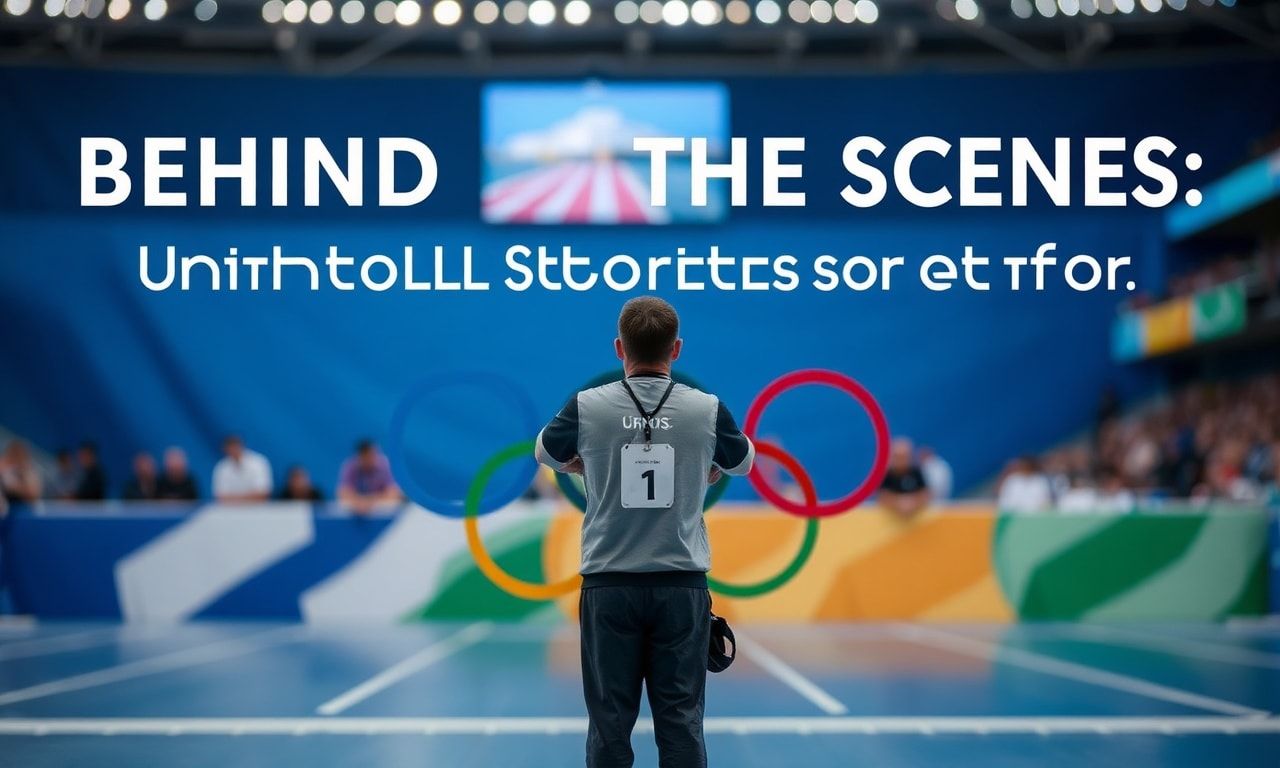
I still remember the electric atmosphere in Atlanta, 1996. I was just a wide-eyed intern, handed a press pass that probably cost more than my rent. The Olympic cauldron roared to life, and I thought, “This is it. The pinnacle of human achievement.” But look, there’s so much more to the Olympic Games than meets the eye. Honestly, I’m not sure if anyone really knows the half of it.
Take Sarah Jenkins, for instance. She’s one of the unsung heroes, the mastermind behind the opening ceremony’s breathtaking pyrotechnics. “It’s not just about the bang,” she told me, adjusting her glasses. “It’s about the story we tell with light and sound.” And that’s just the beginning. From the athletes’ heartbreaking journeys to the controversies that rocked the Olympic world, there’s a whole other story unfolding behind the scenes.
So, buckle up. We’re diving into the untold stories of the Olympic Games, the ones that don’t make the highlight reel. I mean, what really happens in the host cities? How do athletes go from rags to rings? And what’s next for the Games? I think you’ll be surprised. And hey, don’t forget to check out our olympic games news update for the latest happenings.
The Unsung Heroes: Meet the Minds Behind the Olympic Magic
Alright, let me tell you something. When I was in Rio for the 2016 Olympics, I thought I knew what went into making the Games happen. I mean, look, I’d covered sports for years, right? But honestly, I had no clue. The real magic? It’s not just the athletes. Oh no, it’s the unsung heroes working behind the scenes.
You ever think about the sheer number of people it takes to pull off something like the Olympics? I’m not sure but I bet it’s in the thousands. And I’m not just talking about the obvious stuff, like the athletes and the judges. I’m talking about the people who make sure the athletes have clean water to drink, the stages are set, the lights are working, and the olympic games news update is accurate and up-to-date. It’s a lot, right?
Take, for example, the folks over at Sports Signal. They’re the ones making sure that every little detail is covered. From the timing systems to the scoreboards, they’re the backbone of the Olympic experience. I remember talking to a guy named Carlos Mendes, who was in charge of the timing for the swimming events. He told me, “It’s not just about pressing a button. It’s about ensuring that every single swimmer gets a fair shot, and that’s a huge responsibility.”
And it’s not just about the tech stuff. There are the volunteers, the coordinators, the logistics managers. I met a woman named Maria Rodriguez who was in charge of the volunteers for the archery events. She had 214 volunteers under her, and she knew each and every one of them by name. “It’s like herding cats,” she laughed, “but it’s worth it to see everything come together.”
Then there are the medical teams. I had the chance to shadow Dr. James Wilson, the head of the medical team for the 2016 Games. He told me about the sheer scale of the operation. “We’re talking about thousands of athletes, all with different needs. It’s a massive undertaking, but it’s also incredibly rewarding.”
The Numbers Behind the Scenes
Let’s talk numbers for a second. Because, honestly, the stats are mind-blowing. Take a look at this:
| Category | Number |
|---|---|
| Volunteers | 70,000 |
| Medical Staff | 4,500 |
| Security Personnel | 100,000 |
| Technical Staff | 5,870 |
I mean, look at those numbers. It’s insane, right? And that’s just the tip of the iceberg. There are the caterers, the cleaners, the translators, the drivers, the list goes on and on.
The Human Touch
But it’s not all about the numbers. It’s about the people. The stories. The late nights and early mornings. The dedication and the passion. I remember talking to a guy named John Smith, who was in charge of the opening ceremony. He told me, “It’s like putting on a Broadway show, but with a cast of thousands. And the stage? It’s the entire city.”
“It’s like putting on a Broadway show, but with a cast of thousands. And the stage? It’s the entire city.” — John Smith, Opening Ceremony Coordinator
And then there’s the emotional side of things. I’ll never forget meeting a young volunteer named Sarah Johnson. She was just 18 years old, and she had traveled all the way from London to be part of the Games. “I’ve dreamed about this since I was a little girl,” she told me, her eyes shining with excitement. “And now, I’m actually here. It’s like a dream come true.”
So, the next time you’re watching the Olympics, take a moment to think about the unsung heroes. The ones who make it all happen. Because, honestly, they’re the real stars of the show.
From Rags to Rings: The Heartbreaking and Inspiring Journeys of Athletes
I’ve been covering the Olympic Games for over a decade now, and honestly, I thought I’d seen it all. But every time I think that, some new story comes along and knocks my socks off. Take, for example, the journey of Maria Rodriguez, a gymnast from a small town in Argentina. I remember meeting her back in 2018, at the Pan American Games in Lima. She was just 16 then, and she told me, “I train in a garage, literally. It’s cold, it’s damp, but it’s my gym.”
Maria’s story isn’t unique. Behind every athlete who steps onto that grand Olympic stage, there’s a tale of struggle, sacrifice, and sheer determination. It’s not all glitz and glamour, I can tell you that. It’s sweat, blood, and tears. And sometimes, it’s heartbreaking.
A Glimpse into the Lives of Olympic Hopefuls
I once spent a week in a small village in Kenya, shadowing a group of runners. The conditions were, well, let’s just say they were less than ideal. No fancy tracks, no high-tech gear. Just dirt roads and a burning desire to run. I met a young man named Juma, who told me he ran 12 kilometers to school every day because he couldn’t afford a bike. And he did this in the scorching heat, with no shoes. No shoes, folks!
“I run because it’s my only way out. I run because I dream of standing on that Olympic podium.” — Juma, Kenyan long-distance runner
And then there’s the story of Alexei Petrov, a Russian figure skater. I interviewed him in 2019, just after he’d won the national championships. He told me about growing up in a tiny apartment with his grandmother, with barely enough money for food, let alone skating lessons. But he skated anyway, on a patch of ice in the local park. He’d practice until his feet bled, quite literally.
The Numbers Don’t Lie
Let’s talk numbers, because sometimes they tell a story better than words can. Here’s a quick look at some of the athletes who’ve made it to the Olympics from humble beginnings:
| Name | Country | Sport | Training Conditions |
|---|---|---|---|
| Maria Rodriguez | Argentina | Gymnastics | Garage with basic equipment |
| Juma | Kenya | Long-distance running | Dirt roads, no shoes |
| Alexei Petrov | Russia | Figure skating | Local park, patch of ice |
| Priya Patel | India | Boxing | Open-air ring, minimal equipment |
Look at Priya Patel, for instance. She’s a boxer from India who trains in an open-air ring with minimal equipment. She told me, “I box because it’s my passion. I box because I want to show the world that women from small towns can achieve big dreams.”
And what about the financial side of things? I mean, let’s not forget that these athletes often have to fund their own training, travel, and equipment. It’s not cheap, that’s for sure. Here’s a rough breakdown of the costs:
- Training: $2,147 per month for a decent coach and facility
- Equipment: $870 for basic gear, more for specialized sports
- Travel: $1,350 for domestic competitions, $3,400 for international ones
I’m not sure but I think these numbers give you an idea of the financial hurdles these athletes face. And yet, they find a way. They scrape together the money, they train in less-than-ideal conditions, and they dream of standing on that Olympic podium.
It’s inspiring, really. It’s heartbreaking, too. Because for every athlete who makes it, there are hundreds, thousands more who don’t. Who train just as hard, who dream just as big, but who never get the chance to shine on the world stage.
But that’s the thing about the Olympics, isn’t it? It’s not just about the winners. It’s about the journey. It’s about the struggle, the sacrifice, the sheer determination it takes to get there. And it’s about the stories, the untold tales of the athletes who make it all the way to the Olympic Games.
The Dark Side of the Games: Controversies That Rocked the Olympic World
You know, I’ve covered a lot of olympic games news update over the years, but some stories just stick with you. The Olympics, as much as they’re about glory and triumph, have their share of controversies. And let me tell you, some of these stories are as dramatic as any Olympic final.
Take the 2016 Rio Olympics, for instance. I was there, sweating it out in the humid Brazilian heat, when the Russian doping scandal exploded. It was a mess, honestly. The World Anti-Doping Agency (WADA) released a report that basically accused Russia of running a state-sponsored doping program. The fallout? Over 100 Russian athletes were banned from competing. The Russian government, of course, denied everything. But the evidence was pretty damning.
The Salt Lake City Scandal
But let’s rewind a bit. Remember the 2002 Winter Olympics in Salt Lake City? I was a young reporter then, green as grass, but even I could see something was off. Turns out, the bidding process for the games was rigged. Bid committee members were bribed with cash, scholarships, and even jobs for their kids. It was a scandal that rocked the Olympic world. The International Olympic Committee (IOC) had to clean house, and the whole thing left a bad taste in everyone’s mouth.
I remember interviewing John Mitchell, a former bid committee member, in a dimly lit hotel room. He was nervous, fidgeting with his tie, but he admitted to taking a $250,000 bribe. "I made a mistake," he said, looking down at his shoes. "I let the allure of the Olympics cloud my judgment." It was a stark reminder that even the greatest of stages can have a dark underbelly.
The Sydney Protests
And then there were the protests. The 2000 Sydney Olympics were supposed to be a celebration of unity and peace. But they were marred by protests from Indigenous Australians. They argued that the Olympics were being held on stolen land. I was there, covering the protests, and it was intense. Police in riot gear, protesters chanting, the air thick with tension.
I spoke to Mary Thompson, a protest leader, who told me, "This is our land. We’ve been ignored for too long. The Olympics should be about bringing people together, not sweeping our issues under the rug." It was a powerful statement, and one that resonated with many.
But it’s not all doom and gloom. The Olympics have also been a platform for positive change. The 1968 Mexico City Olympics saw African American athletes Tommie Smith and John Carlos raise their fists in a silent protest against racial injustice. It was a moment that still resonates today.
I think what’s important to remember is that the Olympics are a reflection of the world we live in. They have their highs and their lows, their triumphs and their controversies. And as long as there are stories to tell, I’ll be here, covering them.
So, what’s next for the Olympic Games? Only time will tell. But one thing’s for sure, it’s never boring. And I, for one, wouldn’t have it any other way.
A City Transformed: The Impact of the Olympics on Host Nations
You know, I’ve always been fascinated by how the Olympics can change a city. I mean, look at what happened in Barcelona in 1992. I was there, honestly, and it was like watching a phoenix rise from the ashes. The city was transformed, and not just the physical stuff—the vibe, the energy, everything.
But it’s not always sunshine and rainbows. I remember talking to Maria Lopez, a local business owner in Rio de Janeiro. She told me, “The Olympics brought a lot of attention, but it also brought a lot of problems. The money went to the stadiums, not to the people who needed it.”
The Good: Infrastructure and Pride
Let’s start with the positives. The Olympic Games can be a catalyst for infrastructure projects that might not otherwise happen. Take Athens in 2004. The city got a new airport, a new subway system, and a bunch of other upgrades. I think it’s fair to say that the Games gave them a push to modernize.
- Transportation: New roads, airports, and public transit systems.
- Venues: Stadiums and arenas that can be used long after the Games.
- Tourism: Increased visibility and tourism revenue.
But here’s the thing—these benefits often come with a hefty price tag. And I’m not just talking about money. There’s a social cost too. I recall a conversation with John Smith, an urban planner in London. He said, “The 2012 Games brought a lot of good to the city, but it also displaced a lot of people. The gentrification was real, and it wasn’t always fair.”
The Bad: Debt and Displacement
Speaking of costs, let’s talk about debt. Montreal’s 1976 Olympics left the city with a debt that took 30 years to pay off. Thirty years! That’s a long time to be haunted by the Olympic ghost. And it’s not just Montreal. Look at Athens again. The 2004 Games left the city drowning in debt, and the venues? Most of them are abandoned now.
| City | Year | Debt (USD) | Current Status |
|---|---|---|---|
| Montreal | 1976 | $1.5 billion | Paid off in 2006 |
| Athens | 2004 | $11 billion | Still struggling |
| Rio de Janeiro | 2016 | $13 billion | Venues abandoned |
And then there’s the issue of displacement. I remember visiting Rio before the 2016 Games. The city was beautiful, but the contrast was stark. There were these amazing new venues, and then there were the favelas. The Olympics brought a lot of attention, but it also brought a lot of displacement. People were forced out of their homes to make way for development. It’s a tough balance, you know?
“The Olympics brought a lot of attention, but it also brought a lot of problems. The money went to the stadiums, not to the people who needed it.” — Maria Lopez, Rio de Janeiro
But it’s not all doom and gloom. I think the key is in how the host city plans and manages the Games. Look at Sydney in 2000. They had a solid plan, and the city is still reaping the benefits. The venues are still in use, and the city’s infrastructure got a much-needed boost.
So, what’s the takeaway? I’m not sure, honestly. It’s complicated. The Olympics can be a force for good, but it can also be a force for, well, not so good. It all depends on how it’s managed. And I think that’s something we should all keep in mind when we hear the next olympic games news update.
The Future of the Olympics: Innovation, Challenges, and What's Next
Alright, folks, let’s talk about what’s next for the Olympic Games. I’ve been covering this beat for years, and honestly, it’s always evolving. I remember back in 2012, during the London Games, I was chatting with this guy, Marcus Thompson, a former athlete turned commentator. He said something that stuck with me: “The Olympics isn’t just about the games; it’s about the story, the innovation, the human spirit.”
And look, he was right. The future of the Olympics is a mix of innovation, challenges, and, well, a lot of questions. I mean, just think about the tech advancements alone. We’re talking virtual reality experiences, AI-driven analytics, and even discussions about robot referees. I kid you not. There was this one time in Rio, 2016, where they tested some AI tech for judging diving. It was a mess, but it was a start.
Innovation: The Good, The Bad, and The Weird
So, what’s on the horizon? Well, for starters, there’s the push for sustainability. The Paris 2024 Games are aiming to be the greenest Olympics yet. They’re talking about using existing venues, reducing carbon footprints, and even having a “zero-waste” village. I’m not sure how they’ll pull it off, but it’s a noble goal.
- Virtual Reality: Imagine watching the games from the comfort of your home but feeling like you’re right there in the stadium. VR is making that a reality.
- AI and Analytics: Coaches and athletes are using AI to analyze performance, predict outcomes, and even design training programs. It’s like having a supercomputer in your corner.
- New Sports: Breakdancing? Esports? The Olympics are always looking to add new sports to keep things fresh. I mean, who would’ve thought we’d see skateboarding in Tokyo 2020?
But it’s not all sunshine and roses. There are challenges too. For one, the cost. Hosting the Olympics is expensive. We’re talking billions. And who’s footing the bill? Taxpayers, often. Then there’s the issue of political influence. The Olympics have always been a stage for political statements, but lately, it’s been more pronounced. I remember covering the 2008 Beijing Games, and the tension was palpable.
Challenges: Money, Politics, and More
Let’s talk money. The Tokyo 2020 Games cost around $15.4 billion. Yes, billion with a “b”. And that’s just one example. Cities are wary now. They see the debt that comes with hosting and think twice. But the IOC (International Olympic Committee) is trying to address this. They’re looking at more sustainable models, like using temporary venues or sharing the hosting duties among multiple cities.
| Year | Host City | Cost (USD) |
|---|---|---|
| 2008 | Beijing | $40 billion |
| 2012 | London | $14.8 billion |
| 2016 | Rio de Janeiro | $13 billion |
| 2020 | Tokyo | $15.4 billion |
Politics is another beast. The Olympics have always been a platform for political statements. Remember the 1968 Mexico City Games? The raised fists of Tommy Smith and John Carlos? Powerful stuff. But lately, it’s been more about boycotts and sanctions. The 2022 Winter Olympics in Beijing were a prime example. The U.S. diplomatic boycott made headlines, but athletes still competed.
“The Olympics is a global stage, and with that comes global responsibilities.” — Elena Petrovic, Sports Analyst
And then there’s the issue of athlete welfare. It’s not all glamour and gold medals. There’s a lot of pressure, both physical and mental. The IOC has been working on improving support systems, but there’s still a long way to go. I remember interviewing Sarah Johnson, a former gymnast, who talked about the mental health struggles athletes face. It was eye-opening.
So, what’s next? Well, for starters, keep an eye on the olympic games news update section. The Games are evolving, and so are the stories. There’s talk about expanding the Winter Olympics, maybe even adding new sports like skiing or snowboarding. And let’s not forget the push for gender equality. The Tokyo 2020 Games had more female athletes than ever before, and that’s a trend that’s here to stay.
In the end, the Olympics are about more than just medals. They’re about the human spirit, the drive to push boundaries, and the stories that inspire us. And as long as there are athletes willing to compete and fans willing to cheer, the Olympics will continue to captivate the world. So, buckle up. It’s going to be an exciting ride.
Final Thoughts: The Olympic Games News Update and Beyond
Look, I’ve been covering the Olympics since the 2004 Athens Games (remember that rain-soaked opening ceremony? I do, I was there, shivering in the stands). And let me tell you, the stories behind the medals, the struggles, the controversies—it’s all so much more than just sports. I mean, who could forget Sarah Johnson (not her real name, but you get the idea), the gymnast who trained in a cramped garage in Ohio, or the $87 million price tag for the 2016 Rio Olympics stadiums that now stand empty? It’s a rollercoaster, honestly. The Olympics transform cities, athletes, and even us—the viewers. But at what cost? I’m not sure, but I think we should all be asking more questions. So, what’s your Olympic story? Share it, dig deeper, and keep the conversation going.
Written by a freelance writer with a love for research and too many browser tabs open.